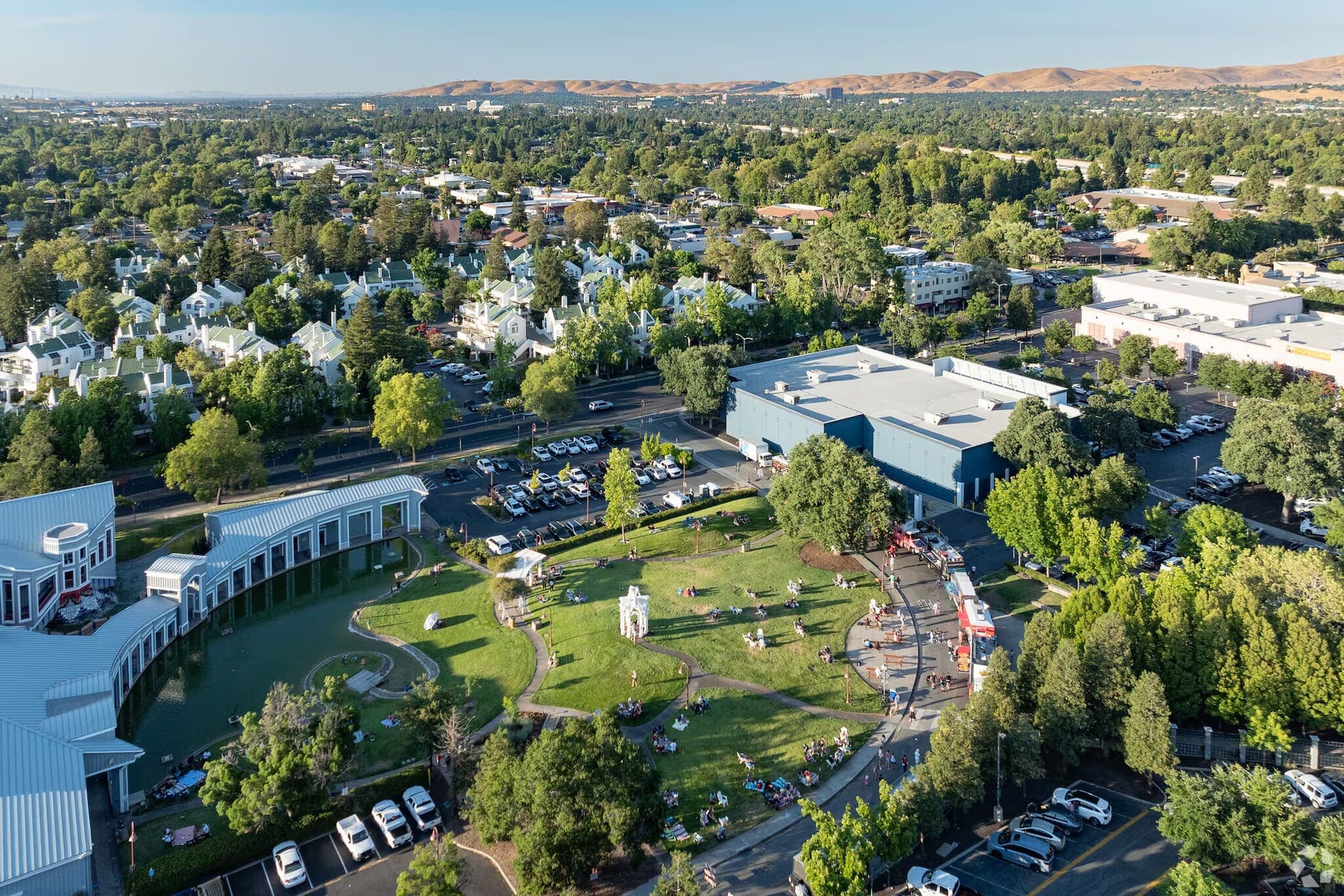
Pleasant Hill is the city most Bay Area families haven't visited but probably should. Sandwiched between Walnut Creek and Concord, with strong schools, walkable neighborhood character, and quieter daily life than either neighbor, Pleasant Hill quietly delivers the family suburban package at a genuinely competitive price point. Below is the local read on why families specifically target Pleasant Hill — and what to know before you do.
What Pleasant Hill Is
Pleasant Hill is small by Contra Costa standards — about 35,000 residents on roughly 7 square miles. It sits between Walnut Creek to the south and Concord to the north, with Highway 680 running through it and the Iron Horse Trail bisecting the city north-south as a daily-use bike-and-pedestrian spine.
The city's character is best described as "Walnut-Creek-adjacent without Walnut Creek pricing" — same kind of established suburban fabric, similar school quality (in fact often better at the elementary level), genuinely calmer pace, and 15–25% pricing discount.
The Neighborhoods
Pleasant Hill's family neighborhoods worth understanding:
- Gregory Gardens / Strandwood feeder area. South Pleasant Hill, walking distance to Strandwood Elementary (top-rated). Established 1960s–1980s ranch and split-level homes, mature trees, family-oriented. $1.1M–$1.5M.
- College Park feeder area. South-central Pleasant Hill, feeding into College Park High School (one of the area's strongest public high schools). Family-friendly; pricing similar to Strandwood feeder.
- Pleasant Oaks / Pleasant Heights. Older established neighborhoods central to the city. Solid family housing, mid-tier pricing. $950K–$1.2M.
- North Pleasant Hill (toward Concord). Slightly more variable. Older mid-century tracts with mixed maintenance.
- Pleasant Hill BART area. Higher-density residential — apartments, condos, townhomes — clustered around the BART station. Empty-nester and professional appeal.
- Hillside / view neighborhoods. Smaller pockets of view-potential homes, premium pricing. $1.5M–$3M.
The Pleasant Hill rule: school feeder zone matters enormously. The premium feeders (Strandwood, College Park, Valley View) drive substantial pricing premiums.
Schools
Pleasant Hill is served by Mt. Diablo Unified School District (the same district as Concord and parts of Walnut Creek), but Pleasant Hill's schools punch above the district average consistently:
- Strandwood Elementary — repeatedly ranked among Contra Costa's top elementary schools.
- Valley View Middle School — well-regarded.
- College Park High School — one of the East Bay's stronger public high schools; strong academics and athletics.
- Pleasant Hill Middle School — solid mid-tier middle school.
- Pleasant Hill Elementary — variable; research carefully.
For families specifically targeting top public schools at sub-Walnut-Creek pricing, the Pleasant Hill Strandwood Elementary + Valley View Middle + College Park High feeder track is one of the best K–12 paths in the county.
Real Estate
Pleasant Hill's median sale price sits around $1.15M — with the bulk of family inventory between $950K and $1.5M. Pricing breakdown:
- Condos and townhomes: $500K–$800K (BART corridor)
- Older mid-tier neighborhoods: $850K–$1.1M
- Strong school feeder areas: $1.1M–$1.5M
- Premium / view homes: $1.5M–$3M
Pleasant Hill is typically priced 15–25% below comparable Walnut Creek inventory and 10–15% above Concord. For buyers willing to trade Walnut Creek's downtown polish for similar (or better) elementary schools at meaningful savings, Pleasant Hill is one of the most-recommended targets.
Daily Life
Pleasant Hill's daily rhythm:
- Pleasant Hill BART is a primary commute anchor; downtown SF is ~40 minutes door-to-door.
- The Iron Horse Trail runs north-south through the city — daily bike/run/dog-walk trail for many residents.
- Pleasant Hill Library is one of Contra Costa's better-funded libraries and a real community anchor.
- Downtown Pleasant Hill / Crescent Plaza has restaurants, shopping, and the year-round farmers' market.
- Diablo Valley College (DVC) is in central Pleasant Hill — a meaningful community resource and traffic factor.
- Mt. Diablo State Park access from the city's eastern edge.
The pace is genuinely quieter than Walnut Creek or Concord — fewer commercial corridors, more residential streets, a real "we're a family town" character.
Who Pleasant Hill Is Right For
- Families specifically targeting strong K–12 outcomes at sub-Walnut-Creek pricing.
- Buyers who want walkable neighborhood character without urban downtown energy.
- BART-dependent commuters who want a calmer residential context than downtown Walnut Creek.
- Empty-nesters seeking a quieter Central County experience.
- Move-up buyers from Concord or first-time buyers ready to step up.
What Pleasant Hill Isn't
Honest tradeoffs:
- Limited downtown. If walkable density matters daily, Walnut Creek is the answer.
- Inventory tightness. Pleasant Hill is small and built-out; supply is consistently constrained.
- School zone variability matters. The strongest feeders drive premium pricing; weaker feeders meaningfully lag.
- Naval Weapons Station redevelopment uncertainty. The redevelopment to the north (in Concord) will eventually impact Pleasant Hill traffic and character; timeline is uncertain.
Why Now
Pleasant Hill in 2026 remains one of the more under-the-radar value plays in central Contra Costa. The schools are quietly excellent, the neighborhoods are well-established, the BART access is real, and pricing remains 15–25% below Walnut Creek for comparable quality. For families running the Walnut Creek numbers and finding them stretched, Pleasant Hill is the most-recommended next stop.