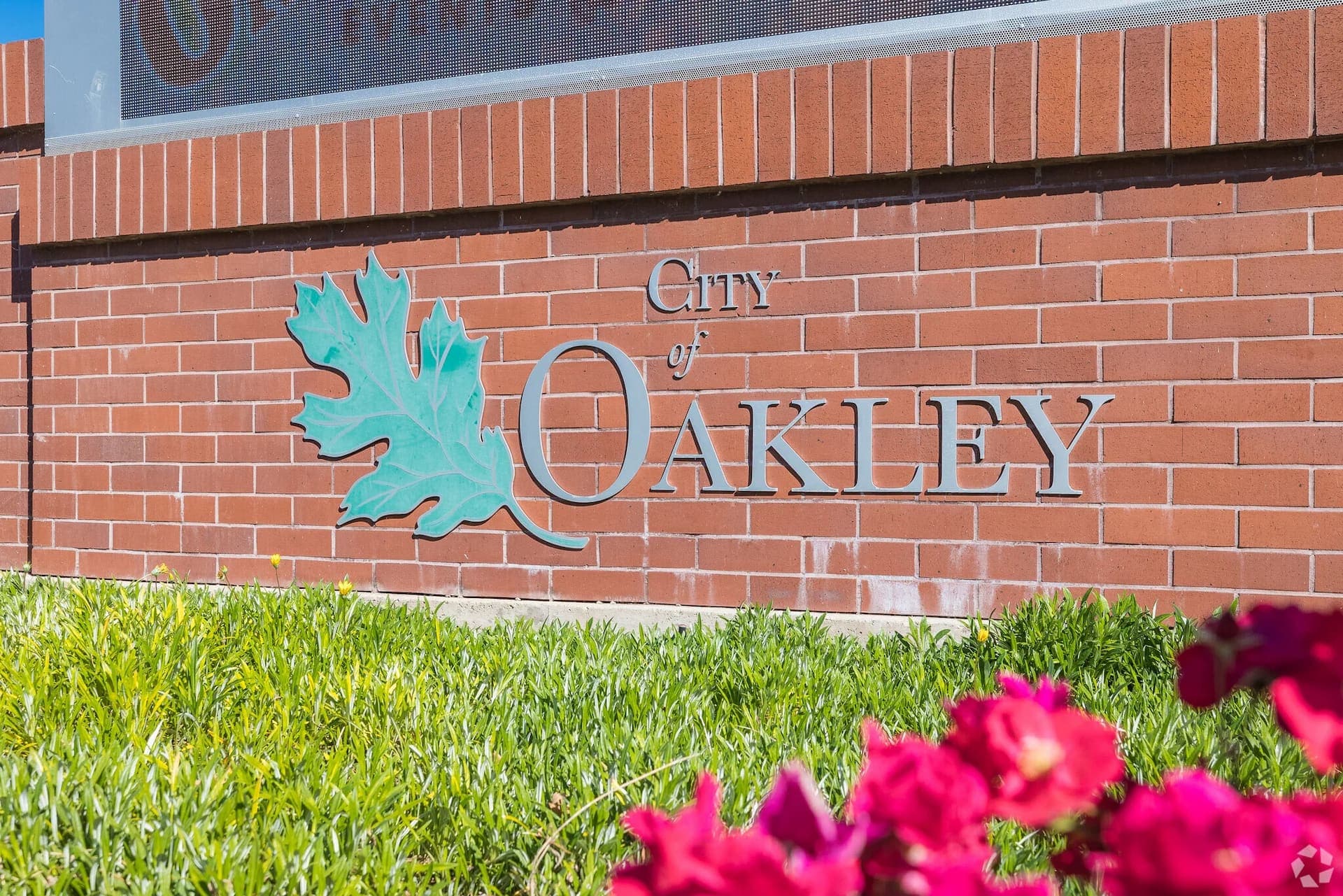

Community comparison
Oakley vs Antioch
Quick take
At a glance
The 60-second version of this comparison. Scroll down for the full breakdown.
Pricing
Oakley
$650K–$950K typical. Newer construction common in eastern Oakley. Mello-Roos significant in newer.
Antioch
$500K–$800K typical. Strong value for square footage. Lone Tree Way corridor commands premium.
Schools
Oakley
Oakley Union Elementary (K-8); Liberty Union HS shared with Brentwood and Discovery Bay.
Antioch
Antioch Unified K-12. Quality varies by specific school. Families typically research individual schools.
Commute
Oakley
Same I-680/Highway 4 corridor as Antioch. eBART accessible (5-10 min by car). Functionally similar.
Antioch
BART eBART direct to SF. Highway 4 widened. 75-90 min peak.
Vibe & character
Oakley
Younger, more master-planned. Smaller downtown but newer. Eastern Oakley has rural feel — orchards, larger lots.
Antioch
City in transformation. Downtown waterfront revitalized. Lone Tree Way corridor modern shopping.
Trade-off highlight: Commute minutes and real monthly housing cost (taxes, Mello-Roos, insurance) usually move decisions more than listing photos—stress-test both against your actual work week and budget.
Pick Oakley if…
- You want newer construction options
- Liberty Union High School District matters for your kids
- Master-planned community character with rural edges appeals
- Slightly higher price for newer/cleaner stock is acceptable
- Smaller-town feel matters more than urban amenities
Pick Antioch if…
- You're betting on Antioch's downtown waterfront renaissance
- More square footage per dollar is your top priority
- Antioch's neighborhood variety appeals more than Oakley's polish
- Newer eastern Antioch developments meet your needs
- Larger city amenities (retail, hospitals, services) matter
Want more detail?
Explore each community
See photos, full market context, and detailed neighborhood guides for each.
Oakley
A small-town heart with room to spread out — agricultural East County's quiet pick. Oakley still feels like a small town. The annual Almond Festival shuts down Main Street, the high school's Friday night football games are genuinely the social event of the week, and you can buy fresh corn from a roadside stand on your way home from work. It's a slower pac…
Explore Oakley →Antioch
BART-connected, value-priced, and one of the most diverse cities in the Bay. Antioch is the workhorse of East County — the largest, oldest, and most diverse city on this side of the hills. Founded as a 19th-century river town, it now stretches from a historic Rivertown waterfront up into the hills above Lone Tree Way, with a wide mix of housing, walkable…
Explore Antioch →Oakley and Antioch are East County neighbors with overlapping price ranges and surprising character differences. Oakley is the smaller, master-planned-style community with newer construction options and rural character on the edges. Antioch is the larger city undergoing a downtown waterfront renaissance, with more diverse neighborhood types and stronger market depth.
If you're cross-shopping these two, you're typically weighing newer construction and rural feel (Oakley) against city-scale amenities and transformation potential (Antioch).
Buyers scanning portals sometimes mistake the two for interchangeable ZIP-adjacent value — then wonder why their agent keeps nudging "feel" questions. Feel matters here: Oakley leans suburban greenfield polish colliding with Delta-adjacent openness; Antioch leans big-city stitching old industry bones to new waterfront ambition. You can love both Sunday afternoons; you will probably prefer one Tuesday evening routine.
School pathways diverge meaningfully — Liberty Union vs Antioch Unified is not a cosmetic difference for households with teenagers in the next three years. Commutes overlap on paper yet diverge in lived BART logistics. This guide unpacks those layers with the specificity East County buyers deserve.
We also acknowledge the political and cultural narratives both cities carry — fair or not, perception influences who bids and how aggressively. We'll separate myth from block-level reality so you can tour with open eyes.
Buyer fit
Who tends to pick Oakley — or Antioch?
Oakley
Who picks it
Oakley buyers typically value newer construction options, rural character on the community's edges, and a 'small town' feel that Antioch (much larger) can't match. Many are second-time homebuyers upgrading from Antioch or Pittsburg specifically to get newer construction or more land. Oakley's master-planned developments offer family-focused suburban character without Antioch's urban density.
First-time buyers appear too — especially dual earners who want turnkey systems, modern floor plans, and HOAs that handle front-yard uniformity so Saturday is for kids' sports instead of xeriscape debates.
Buyers who work from home and host extended family appreciate the bedroom count arbitrage Oakley often supplies relative to inner-East Bay alternatives. The town still feels "young" in infrastructure terms — many neighbors bought recently, which can mean vibrant school PTAs and fewer entrenched feuds.
Antioch
Who picks it
Antioch buyers come in two distinct groups. (1) First-time buyers and value-conscious families attracted to the city's affordability and the variety of neighborhood options. (2) Buyers betting on Antioch's downtown waterfront renaissance — the city is in active transformation, and Lone Tree Way corridor and downtown are visibly improving year over year.
There is also a pragmatic third thread: multigenerational households leveraging Antioch's deeper inventory to find duplex-adjacent setups or ADU-friendly lots that Oakley's newer tracts rarely mimic at the same price.
Antioch rewards flexibility — if you can see charm in working-class blocks awaiting their turn for investment, you will find numbers that still startle newcomers from pricier cores.
Pricing & schools
What the money buys — and what schools look like
Oakley
Pricing snapshot
Family homes typically $650K–$950K. Newer construction common in eastern Oakley (East Cypress, Brentwood-adjacent areas). Mello-Roos can be substantial in newer developments.
Buyers should map special assessments across specific tracts — two Oakley listings priced similarly can carry meaningfully different monthly loads once bonds attach.
Lots on the rural edge trade for privacy, well water conversations, and occasional agricultural easement surprises — diligence with surveyors pays here.
Antioch
Pricing snapshot
Family homes typically $500K–$800K. Strong value for square footage. Lone Tree Way corridor commands a premium over older central Antioch. Newer construction east of Highway 4 reaches mid-$800Ks.
Antioch still holds one of the stronger "dollars per bedroom" arguments in BART-linked Northern California — but condition variance is wider. Vintage homes can be steals or money pits; hire inspectors who know East County foundations and soils.
Waterfront-adjacent pockets can spike — compare insurance quotes early if you flirt with Delta proximity.
Oakley
Schools
Oakley Union Elementary School District (K-8) generally well-regarded for community size. Liberty Union High School District (one of California's strongest at the high school level) shared with Brentwood and Discovery Bay.
Families who dream about Friday night lights and college-prep momentum often lean Oakley-side once they tour Liberty's culture — still, verify feeder patterns for your specific address; growth occasionally shuffles boundaries in conversation.
Younger-child parents sometimes underestimate how fast elementary comfort becomes teenage logistics — map the full arc now.
Antioch
Schools
Antioch Unified School District K-12. Quality varies by specific school. Some elementary schools are well-regarded, some are weaker. Families typically research individual schools rather than relying on district reputation.
That variability can intimidate — treat it as a research project, not a verdict. Great teachers exist everywhere; so do mismatches. Talk with principals, read recent board minutes, attend a PTA meeting if you can.
Households considering private or parochial routes should bake tuition into the value comparison vs Oakley's Liberty path — sometimes Antioch still wins net; sometimes the spreadsheet flips.
Between two great options?
Take the Neighborhood Quiz
Five quick questions — get instant matches across the communities we cover, including Oakley and Antioch, tuned to budget, commute, schools, and vibe.
Take the Neighborhood QuizCommute & daily life
Commute reality and lifestyle texture
Oakley
Commute
Same I-680/Highway 4 corridor as Antioch. eBART to Antioch is accessible (5-10 minutes by car). Functionally similar commute to Antioch.
Delta breezes do not erase freeway reality — model typical Tuesday evenings honestly. Carnitas cravings in Concord still mean merging sooner than you wish.
Hybrid workers should evaluate home-office ergonomics — both cities reward houses large enough for real desks, not hallway laptops.
Antioch
Commute
BART at Antioch station (eBART) provides direct rail to SF. Highway 4 widened. Total commute typically 75-90 minutes peak.
Living inside Antioch can shorten the first mile to eBART pickups relative to some Oakley addresses — test drive pickup zones at rush hour if rail days matter.
Employer subsidies for transit or parking can shift the math — have HR clarify before you lock affordability assumptions.
Oakley
Lifestyle
Oakley feels younger and more master-planned than Antioch. The town has a real downtown but it's smaller and newer than Antioch's. Newer developments have polished suburban character. Eastern Oakley has rural feel — orchards, larger lots, more agricultural character.
Weekend Delta access — Big Break, kayaking dreams, long flat bike horizons — flavors Oakley life subtly differently than Antioch's waterfront reinvention narrative. Neither is wrong; they are different hobbies wearing baseball caps.
Retail runs a bit thinner — many residents blend Oakley home life with Brentwood runs for certain shopping density.
Antioch
Lifestyle
Antioch is a city undergoing transformation. Downtown waterfront has revitalized retail and dining. Lone Tree Way corridor is the modern shopping center. Older central neighborhoods retain working-class character. More 'on the way up' feel than Oakley.
Scale advantages show up in healthcare, services, and civic amenity variety — useful when life gets complicated with appointments and specialists.
Noise and activity vary blockwise — honor your sensitivity to helicopters, trains, and nightlife bleed; cities contain multitudes.
Decision checklist
Pick Oakley if… — or Antioch if…
Lean toward Oakley if:
- You want newer construction options
- Liberty Union High School District matters for your kids
- Master-planned community character with rural edges appeals
- Slightly higher price for newer/cleaner stock is acceptable
- Smaller-town feel matters more than urban amenities
Lean toward Antioch if:
- You're betting on Antioch's downtown waterfront renaissance
- More square footage per dollar is your top priority
- Antioch's neighborhood variety appeals more than Oakley's polish
- Newer eastern Antioch developments meet your needs
- Larger city amenities (retail, hospitals, services) matter
Honest trade-offs
What nobody should pretend is simple
Oakley and Antioch are genuinely different communities serving different buyer profiles. Oakley is more master-planned and family-focused, Antioch is more urban and varied.
Oakley's strength: predictability and newer construction. You generally know what you're getting in Oakley — master-planned suburban character with strong K-12 schools shared with Brentwood. The downside: smaller selection, less variety.
Antioch's strength: variety and transformation potential. You can find genuine value in specific Antioch neighborhoods, and the downtown renaissance is creating a real upside narrative. The downside: school district variation requires research, and older neighborhoods are less polished.
For most buyers, the question is whether you want a master-planned suburb (Oakley) or a transforming city (Antioch). Both are reasonable choices for similar buyers.
Long-horizon buyers should also watch infrastructure maintenance and climate adaptation budgets — bigger cities carry bigger balance sheets; smaller towns ride county partnerships differently. Neither eliminates the need for personal emergency reserves.
Final thoughts
How we'd break the tie
If you're cross-shopping Oakley and Antioch and you don't have a strong preference, look closely at the specific neighborhoods you can afford in each. Sometimes Oakley wins on community character at the expense of size; sometimes Antioch wins on space and price at the expense of polish. The right answer often depends on the specific homes you're considering rather than the cities at large.
Trust the intersection of data and heartbeat: if a particular listing makes you exhale when you walk the backyard, interrogate it structurally — then decide which city's trade-offs you would rather live beside for the next chapter.
Insurance and special hazard zones deserve attention in both markets — flatter Delta-adjacent terrain and wind patterns differ from hilltown risk, but underwriters still ask sharp questions. Answer them early.
Also explore community security expectations realistically — talk with neighbors about car break-in trends, package theft, and Block Watch culture. Neither city is crime fiction; both benefit from eyes on the street.
If you are an investor, note regulatory differences on ADUs, short-term rentals, and rent-control expectations — East County evolves policy as housing pressures rise. Owner-occupiers face fewer headaches but should still scan bulletins.
- Median Home Price
- $735K
- Population
- 44,000
- School Rating
- 7/10
- Commute to SF
- 80 min
- Commute to Walnut Creek
- 35 min
- Median Home Price
- $655K
- Population
- 115,000
- School Rating
- 6/10
- Commute to SF
- 70 min
- Commute to Walnut Creek
- 25 min
More comparisons
Related comparisons
Community Comparison
Brentwood vs Oakley
Two adjacent East County master-planned communities with similar fundamentals — but meaningfully different daily experiences.
Read comparison6 min read · May 6, 2026
Community Comparison
Antioch vs Pittsburg
East County's twin value-tier markets — adjacent BART-accessible cities with similar pricing but distinctly different community character.
Read comparison6 min read · May 6, 2026
Go deeper
Related guides

Cost of Living
Cost of Living in East County 2026
What it actually costs to live a comfortable life in East County — from a starter home in Antioch to a Discovery Bay waterfront lifestyle.
Read MoreBy the LIEC Team · 10 min read · Apr 1, 2026

Buying
First-Time Homebuyer's Guide to East County
Practical advice tailored to East County's market: financing programs, neighborhoods that work for entry-level buyers, what to expect at every step.
Read MoreBy the LIEC Team · 13 min read · Mar 20, 2026
Free guide
Still weighing two areas? Use our free comparison worksheet
A fillable worksheet to score communities against your priorities — so you can compare apples to apples after touring three or four neighborhoods.
- Priority ranking framework (15 factors)
- 5 community scoring sheets (fillable)
- Weighted summary calculator
Still deciding?
We help East and Central Contra Costa buyers weigh trade-offs every week — no pressure, just local context.