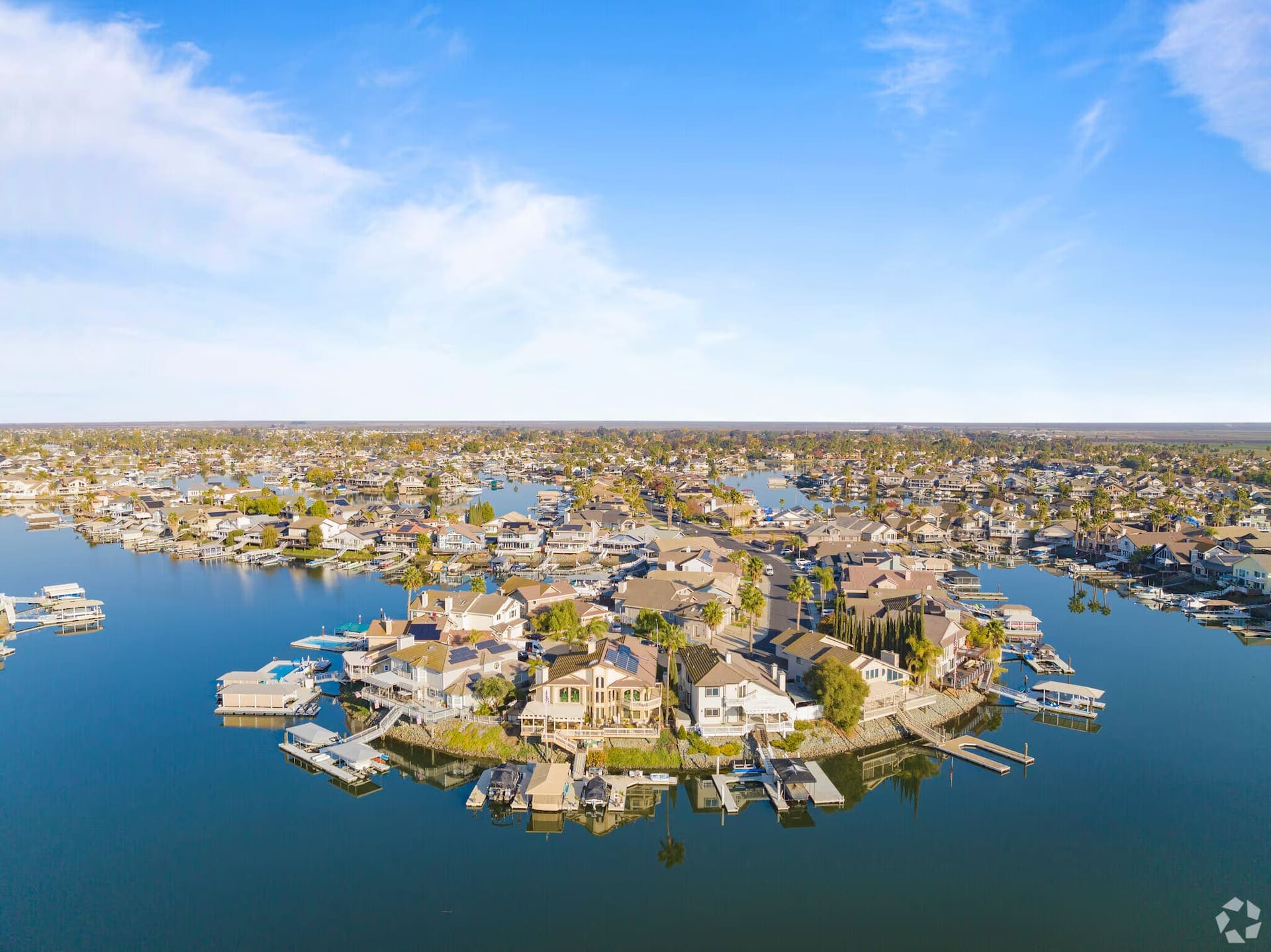
Buying a waterfront home in Discovery Bay is genuinely different from buying a comparable home on a regular suburban lot. The pricing dynamics are different, the carrying costs are different, the inspection process is different, and the resale buyer pool is different. None of this is a reason not to buy — Discovery Bay waterfront has been one of the better-performing real estate categories in the broader Bay Area for the past decade — but it's a category that rewards informed buyers and punishes the unprepared. Below is what we walk every waterfront client through before they make their first offer.
Why Waterfront Premium Can Be 30–50%+
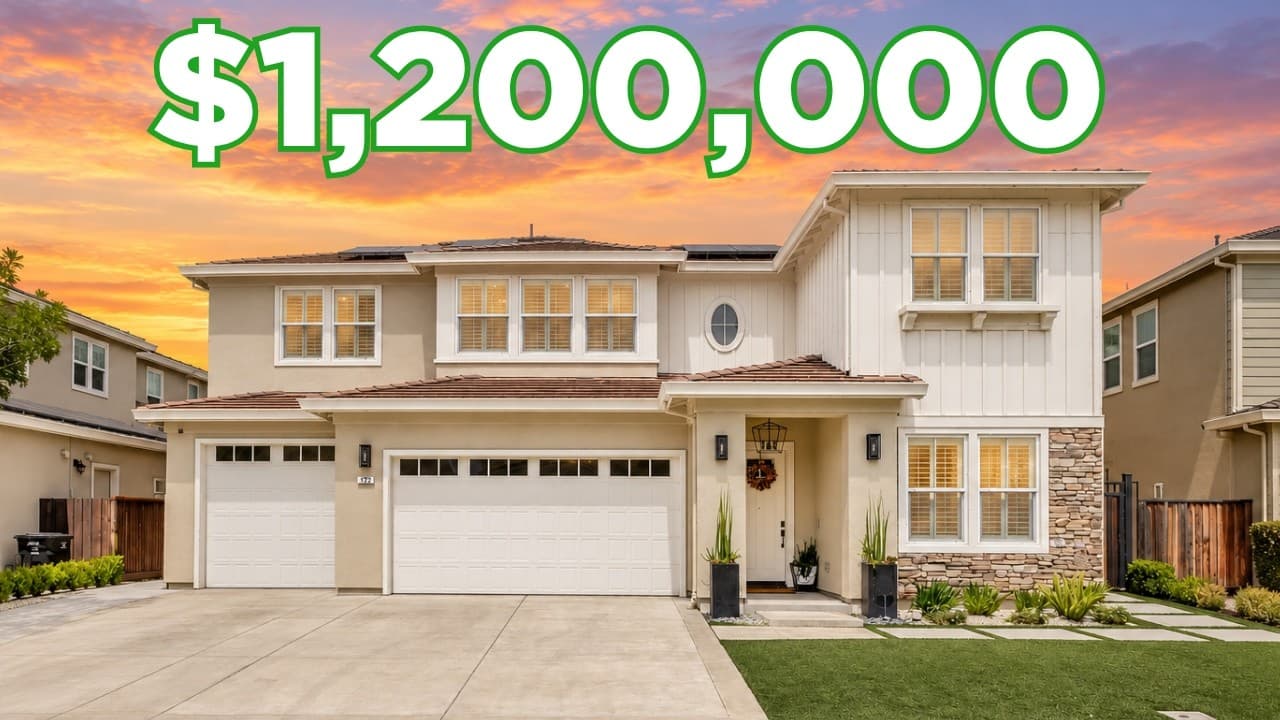
The simplest rule of Discovery Bay pricing: the dock matters more than the kitchen. A standard 2,400-sqft 4-bedroom home in an off-water Discovery Bay neighborhood will list around $850K. The same home on a deep-water lot with an updated dock and direct access to fast water will list at $1.2M–$1.4M. That gap — $350K–$550K — isn't paying for square footage or finish quality. It's paying for the lifestyle infrastructure: the dock, the water depth, the easy access to the wider Delta.
The premium is real and it's persistent. Through the 2018–2025 real estate cycle, Discovery Bay waterfront resale outperformed off-water resale in both up and down markets. The buyer pool is narrower (you have to want the lifestyle), but the demand is durable.
Types of Waterfront Locations
Not all "waterfront" is created equal. The categories that matter:
- Deep-water waterfront with year-round navigable depth. The premium product. Suitable for any boat size, including larger motor yachts. Direct access to fast water and the broader Delta network.
- Tidal-controlled waterfront. Some Discovery Bay channels are tide-influenced; depth varies by tide. Functional but requires planning around tides for larger boats.
- Lagoon or shallow-water lots. Pretty, but limited to smaller boats or non-motorized craft (paddleboards, kayaks, small electric boats). Lifestyle is real but constrained.
- Levee-fronted lots without dock infrastructure. Some lots front the levee but lack permitted dock infrastructure. Aesthetic upside without practical boating access.
When evaluating any waterfront listing, the questions that matter:
- What is the water depth at low tide?
- What is the maximum boat size the dock can accommodate?
- Is there protected mooring (covered or partially-protected dock)?
- How quickly can you get from the home to fast water?
Hidden Costs Waterfront Buyers Should Plan For
The carrying costs on a Discovery Bay waterfront home include several line items that suburban buyers don't typically encounter:
- Dock maintenance and replacement. Wood docks need periodic re-decking and pile replacement; composite docks last longer but cost more upfront. Plan for $5K–$15K every 5–10 years on average; complete dock replacement runs $40K–$120K.
- Increased homeowner's insurance. Waterfront and proximity-to-water homes carry meaningfully higher insurance premiums than comparable inland homes. Get a binding quote BEFORE removing the insurance contingency.
- Levee and reclamation district assessments. Discovery Bay sits behind a levee system maintained by Reclamation District 800; annual assessments fund upkeep. Most homes carry $500–$1,500/year in levee-related assessments.
- HOA dues for community amenities. Most Discovery Bay neighborhoods have HOAs covering pools, parks, common landscaping, and (in some cases) shared waterway maintenance. Typical $80–$300/month.
- Boat-related infrastructure. Boat lifts ($8K–$25K), shore power connections, dock lighting — these are common upgrades that aren't trivial.
The all-in carrying cost on a $1.4M Discovery Bay waterfront home, with mortgage, taxes, insurance, HOA, and reasonable dock maintenance reserves, runs roughly $9,500–$11,500/month at current rates.
What Adds Value vs. What Doesn't
Things that meaningfully add resale value:
- Year-round deep-water access.
- Updated, well-maintained dock with shore power and a boat lift.
- Wide channel frontage (more dock options, better views).
- Quick run to fast water (under 5 minutes from dock to fast water is a real selling point).
- Permitted dock improvements with current paperwork.
Things that buyers think will add value but don't, much:
- Dock size beyond practical boat size. A 60-foot dock on a property where the channel only supports a 30-foot boat doesn't add proportional value.
- Heavy landscaping that obstructs views. Buyers want the water visible from the home; over-landscaping reduces appeal.
- High-end interior finishes that don't match the home's positioning. Spending $200K on a luxury kitchen in a $900K home doesn't recover dollar-for-dollar; spending $40K on a dock upgrade can.
Resale Considerations
A few patterns worth understanding for resale:
- Photography matters disproportionately. Drone photography, golden-hour shots, and staged dock furniture meaningfully impact buyer interest. Spend the money on the listing presentation.
- Spring listings outperform. April–June listings see the strongest activity; the boating-season buyer mindset is most engaged.
- The Discovery Bay buyer pool is regional, not local. Most waterfront buyers are coming from elsewhere in the Bay Area or from out-of-state second-home demand. Plan listing strategy accordingly.
First-Time Waterfront Buyer Common Mistakes
Mistakes we see most often:
- Skipping the marine-specific inspection. Standard home inspectors don't evaluate dock condition, pile integrity, or seawall structure. Hire a marine surveyor in addition to your standard general inspector.
- Underestimating insurance complexity. Get a binding insurance quote in writing during your contingency period, NOT after closing. Some carriers have raised rates substantially or stopped writing in flood-zone-adjacent areas.
- Overestimating dock condition based on visual inspection. Wood pilings can look fine and be 80% rotted underwater. A marine surveyor will tap-test and visual-inspect every piling.
- Buying the wrong waterfront for the boat. If you have a 38-foot motor yacht and you buy a lot with 4 feet of low-tide water depth, you have a problem. Confirm depth specs against your boat specs before removing contingencies.
- Underestimating commute reality. Discovery Bay sits at the end of Highway 4. Drive your real-world commute at peak before committing.
We do a lot of these
Discovery Bay waterfront is one of our specialty areas — happy to walk through specific properties, dock conditions, and the financial picture for your situation.