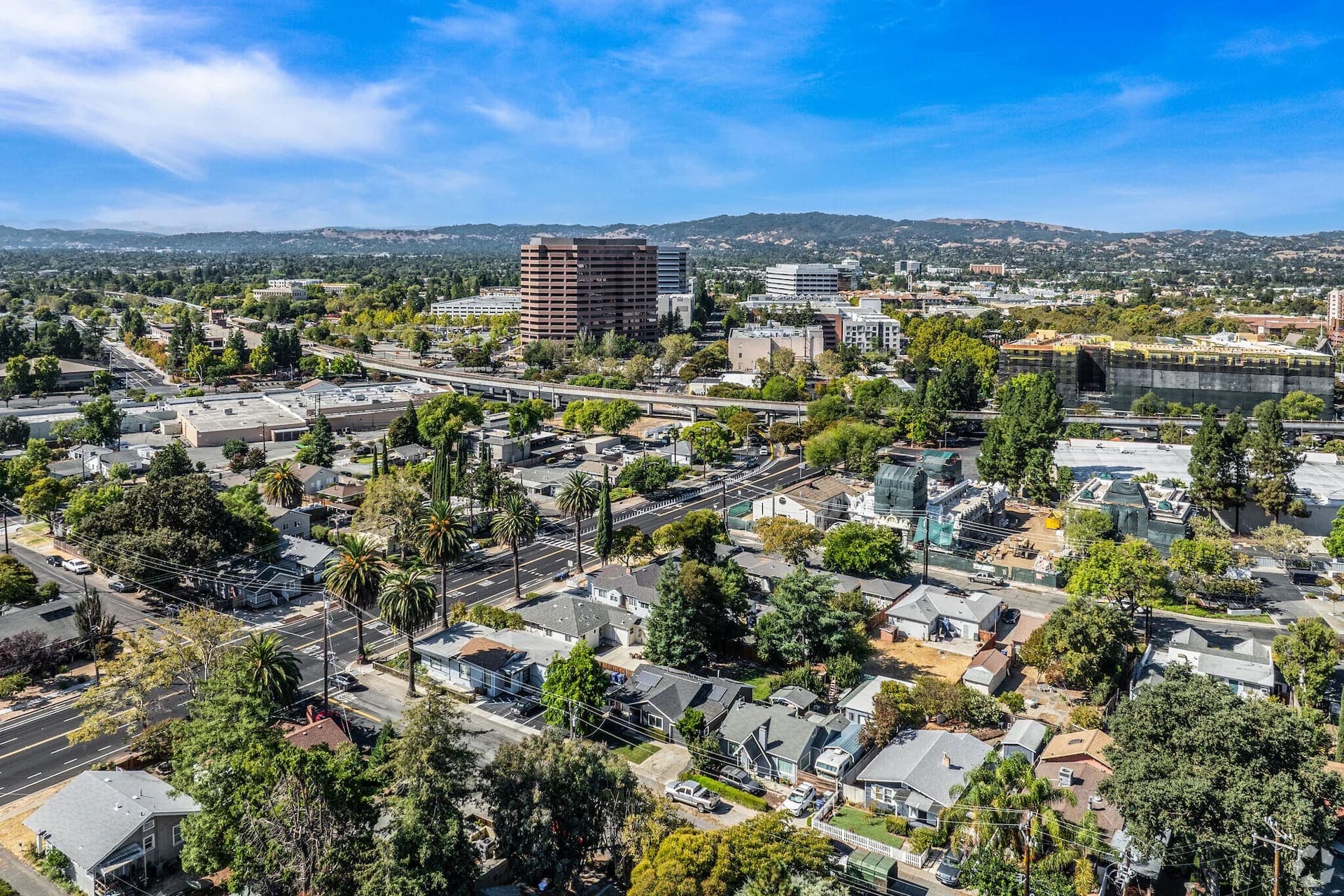
Concord and Walnut Creek are the two largest cities in central Contra Costa County, and they're often the two finalists in a Bay Area buyer's Central County search. They share BART access, share school district overlap (parts of Concord feed into Mt. Diablo Unified, parts of Walnut Creek do too), and sit shoulder to shoulder on the map. The differences are real — pricing, polish, neighborhood character, school quality variability — and they matter. Below is the framework that comes up in this conversation most often.
The Quick Take
If walkable downtown amenities, top-tier school zones, and the most polished suburban experience matter to you, Walnut Creek.
If you'd rather have meaningfully more home for the same money, you're comfortable researching individual school zones, and you don't need Walnut Creek's level of downtown polish, Concord.
The pricing gap drives most decisions; the lifestyle gap drives the rest.
Housing & Price
| Factor | Concord | Walnut Creek |
|---|---|---|
| Median sale price | ~$925K | ~$1.45M |
| 4-bed family home | $850K–$1.2M | $1.4M–$2.2M |
| Premium homes | $1.3M–$2.5M | $2.0M–$5M+ |
| New construction | Limited | Limited |
| Condos/townhomes | $400K–$700K | $750K–$2M+ |
The simplest way to look at it: Concord pricing is 30–40% below comparable Walnut Creek inventory for similar size and quality. A 4-bed, 2.5-bath, 2,400-sqft family home that lists for $1.6M in Walnut Creek lists for $950K–$1.05M in Concord. Over a 7-year hold, that's substantial cash flow difference plus carrying costs.
Lifestyle
Walnut Creek delivers a downtown experience that's genuinely rare in suburban California — Broadway Plaza, restaurant density, arts programming, mature urban character.
Concord delivers a smaller, less polished downtown around Todos Santos Plaza — real and increasingly active, but at one-third the density. The retail mix in Concord skews practical (Sunvalley Mall, regional shopping centers); the restaurant scene is solid but a tier below Walnut Creek.
If walkable downtown is a daily-life requirement, Walnut Creek wins. If you'd be driving to most things in Walnut Creek anyway (which most family buyers in the western neighborhoods do), the lifestyle delta is smaller than it appears.
Schools
The school comparison is the most-misunderstood part of the conversation.
Both cities share Mt. Diablo Unified School District in significant parts of their footprint, and the district has dispersed quality. The very best Mt. Diablo Unified schools — Northgate High, Walnut Heights Elementary, Strandwood Elementary — are in Walnut Creek and Pleasant Hill, not Concord. Las Lomas High School (Acalanes Union, in Walnut Creek) is one of the East Bay's stronger high schools and serves Walnut Creek but not Concord.
Concord's stronger feeders (Sun Terrace, Foothill Middle, parts of Concord High) are solid; the city's lower-performing zones are notably below Walnut Creek's worst zones.
For families specifically optimizing on top-tier public-school outcomes, Walnut Creek is generally the better choice. For families willing to research and target Concord's stronger feeders, Concord is competitive at meaningfully lower prices.
BART Access
Both cities have direct BART access. Walnut Creek BART is a single station in the heart of downtown. Concord has two stations (Concord BART and North Concord/Martinez BART), which gives Concord broader coverage but with more residential walking distance to either station.
Practical impact: equally strong commute story for full-time SF commuters; Walnut Creek slightly more compact for downtown-area residents.
Who Should Choose Walnut Creek
- Buyers with budgets supporting $1.4M+.
- Families specifically targeting Northgate High, Las Lomas High, or other Walnut Creek-zoned top schools.
- People who would actually use Walnut Creek's downtown amenities daily.
- Buyers prioritizing the most-polished suburban experience in our coverage area.
- Empty-nesters and retirees seeking walkable downtown lifestyle.
Who Should Choose Concord
- Buyers stretched in Walnut Creek pricing.
- Families willing to research Concord school zones carefully and target the strongest feeders.
- Hybrid workers who use BART occasionally rather than daily.
- Move-up buyers from Pittsburg, Antioch, or first-time buyers ready to step up.
- Long-hold buyers betting on the Naval Weapons Station redevelopment as a long-term upside driver.
A practical recommendation
If you have a $1.0M–$1.2M budget for Central County:
- A $1.1M Walnut Creek home is typically in a mid-tier school zone or older inventory; you may not be getting Walnut Creek's best.
- A $1.1M Concord home is typically in a strong Concord neighborhood (Crystyl Ranch, hillside) with newer construction or recent renovation, and meaningfully more square footage.
For families specifically optimizing on schools, the Walnut Creek mid-tier zone may not be a huge upgrade over the strongest Concord feeders — and the Concord home is usually larger and newer. Worth running the math both ways.
We help families through this exact comparison weekly.